
Table of Contents

Choosing a casino game is easier when the lobby is treated as a catalogue rather than a single wall of titles. The betya bonus information may attract attention, but the more useful question is which game format suits your preferred pace, level of interaction and tolerance for changing results. This guide explains how to navigate the available categories, distinguish random-number games from live tables, and use demos and published information without assuming that any title guarantees a particular outcome.
Begin with the format, not the game title
A practical first step is to decide how you want the game to feel. Video slots are usually the easiest category for quick browsing because each title presents a compact theme, a fixed set of mechanics and a clearly displayed spin function. Classic slots offer a simpler presentation, often with fewer visual features. Video poker adds a decision element, while bingo, keno and scratch cards provide different ways to engage with chance-based play.
Table games are better suited to readers who want familiar rules and more visible decision points. Blackjack, roulette, baccarat and craps each use different processes, even though all rely on random outcomes. Blackjack involves choices during a hand, baccarat generally involves selecting an outcome, and roulette focuses on placing wagers on numbers, colours or groups. Treat these as distinct experiences rather than interchangeable versions of the same game.
A third group includes instant and crash-style games, casino originals, dice games and game-show formats. These may have shorter rounds or more prominent visual effects, which can make them feel faster than traditional table games. That pace is not evidence of better value or improved odds. Before selecting a title, consider whether you prefer short sessions, slower rounds, familiar rules, or more interaction with a live presentation.
How can lobby filters make browsing more useful?
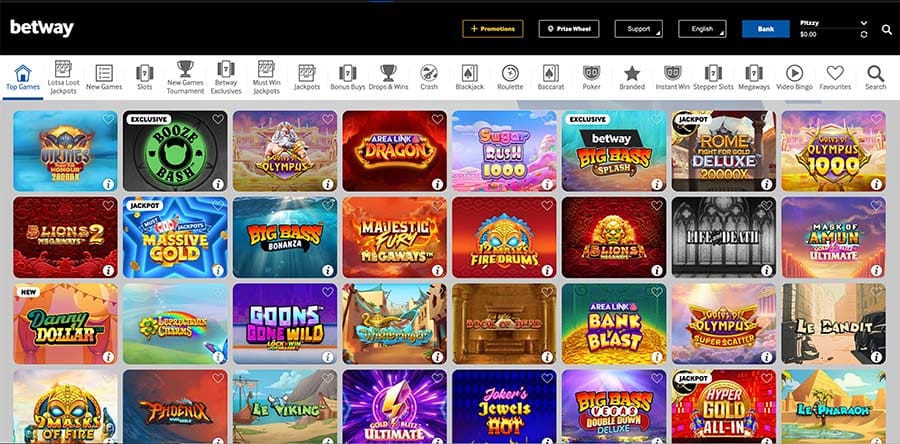
A large library becomes easier to manage when filters are used in a deliberate order. Start with a broad category such as Video Slots, Live Dealer, Blackjack or Table Games. Then narrow the list using labels such as New, Top 50, Hot, Favorites or Recents. These labels describe how the lobby organises titles; they should not be read as proof that a game is more likely to produce a return.
For a first pass, compare only a few titles at a time. Look at the displayed theme, reel or table layout, minimum stake where shown, and whether the game includes features such as cascading reels, Hold & Win mechanics or bonus rounds. If a title has too many animated elements, try a classic format instead. If a conventional table feels too slow, an instant game may be more suitable, provided its rules are understood first.
Use personal lists for organisation rather than prediction. Favourites can store games that are easy to understand, while Recents can help you return to a title without assuming that previous results affect future rounds. The catalogue also includes many studio names, but a familiar provider does not remove the need to read the individual game information. Rules, paytables and displayed details should always be checked on the title itself.
What should you inspect before trying a slot?
Slots can look similar while operating with very different mechanics. Examine the paytable for winning combinations, special symbols, bonus triggers and any stated maximum win or feature conditions. A title with cascading reels may replace symbols after a win, while a Hold & Win game may use special symbols that remain visible during a feature. These descriptions explain how the game works, not how often a feature will appear.
Where available, review the title-specific RTP information. RTP is a long-run theoretical measure, not a forecast for one session, and it does not ensure that a particular deposit will return a stated amount. Volatility is also important when it is disclosed: higher-volatility games may produce less frequent but larger changes, while lower-volatility games may show smaller changes more often. Neither profile makes a game automatically suitable for every player.
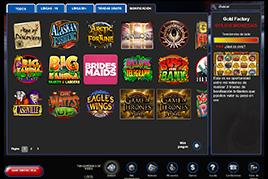
Many random-number games offer a demo mode. This can be useful for learning the buttons, paytable and bonus structure without risking money, but a short demonstration cannot verify RTP, volatility or future performance. It is best used as an orientation tool. If the rules remain unclear after a demo, move to another title rather than treating uncertainty as part of the entertainment.
When does a live table make more sense?
Live dealer games add video, a human dealer and a shared table presentation. Blackjack, roulette and baccarat are commonly available in this format, with some tables also offering chat or different betting layouts. The appeal is usually the atmosphere and pacing rather than a fundamentally different basis for the game. The underlying outcomes still depend on the relevant game process and chance.
Choose live play only when you are comfortable with its rhythm. A streamed table may take longer between decisions than an instant game, and a busy table can make the experience feel more social. Read the table rules before joining, including the available betting options, minimum and maximum stakes where displayed, and any differences between variants. A live version may not use exactly the same rules or limits as a digital version.
For general information about gambling concepts and safer decision-making, the Responsible Gambling Council’s information for Canadians provides an independent reference point. It does not confirm the rules or availability of any particular table. Instead, use it alongside the operator’s displayed game information, especially when comparing speed, session length and the amount of attention a live format demands.
How should you compare games without chasing results?
A useful comparison focuses on suitability rather than recent wins. Ask whether the rules are clear, whether the pace is comfortable, and whether the game fits a predetermined entertainment budget. A recent result, a “hot” label or a large jackpot does not establish that a title is due to win or that another title is cold. Random outcomes do not become predictable through browsing history.
It can help to create a short personal checklist before choosing a title:
- Do I understand the basic rules and special features?
- Is the pace appropriate for the time I intend to spend?
- Have I checked the displayed RTP or other title information?
- Am I choosing this game for its format rather than a promise of profit?
- Would I be comfortable stopping after the planned session?
After making a choice, avoid switching repeatedly because of an early result. Changing from slots to roulette, or from a digital table to a live table, does not correct previous losses. If a game becomes frustrating or too fast, take a break, reduce the session scope or use available account controls such as deposit limits and cooling-off settings. The best discovery process is one that keeps the game understandable and the decision deliberate.
Questions about exploring casino game types
Are “Hot” or “Top 50” games more likely to win?
No. Those labels are navigation or popularity categories, not mathematical guarantees. A game’s position in a lobby does not change its random outcomes, RTP or volatility. Use them to discover titles, then inspect each game’s rules and displayed information before deciding whether its format suits your preferences.
Is a demo enough to judge a game?
A demo can show how the controls, paytable and features work, making it useful for learning. It cannot establish future results, prove a short-term return rate or reproduce every possible outcome. Treat it as a way to decide whether the game is understandable and enjoyable, not as a performance test.
Which format is best for a beginner?
There is no universal best format. A simple classic slot may be easy to navigate, while roulette or baccarat may be easier for someone who prefers established table rules. Start with the category whose instructions you understand, review the title details, and choose a pace that does not encourage rushed decisions.
